Induction vs. Infrared Cooker: Which One Is Best for You?

Planning to buy an electric cooker? One question comes up for almost every buyer: Should you choose an induction cooker or an infrared cooker? More importantly, which one is the right choice for your home?
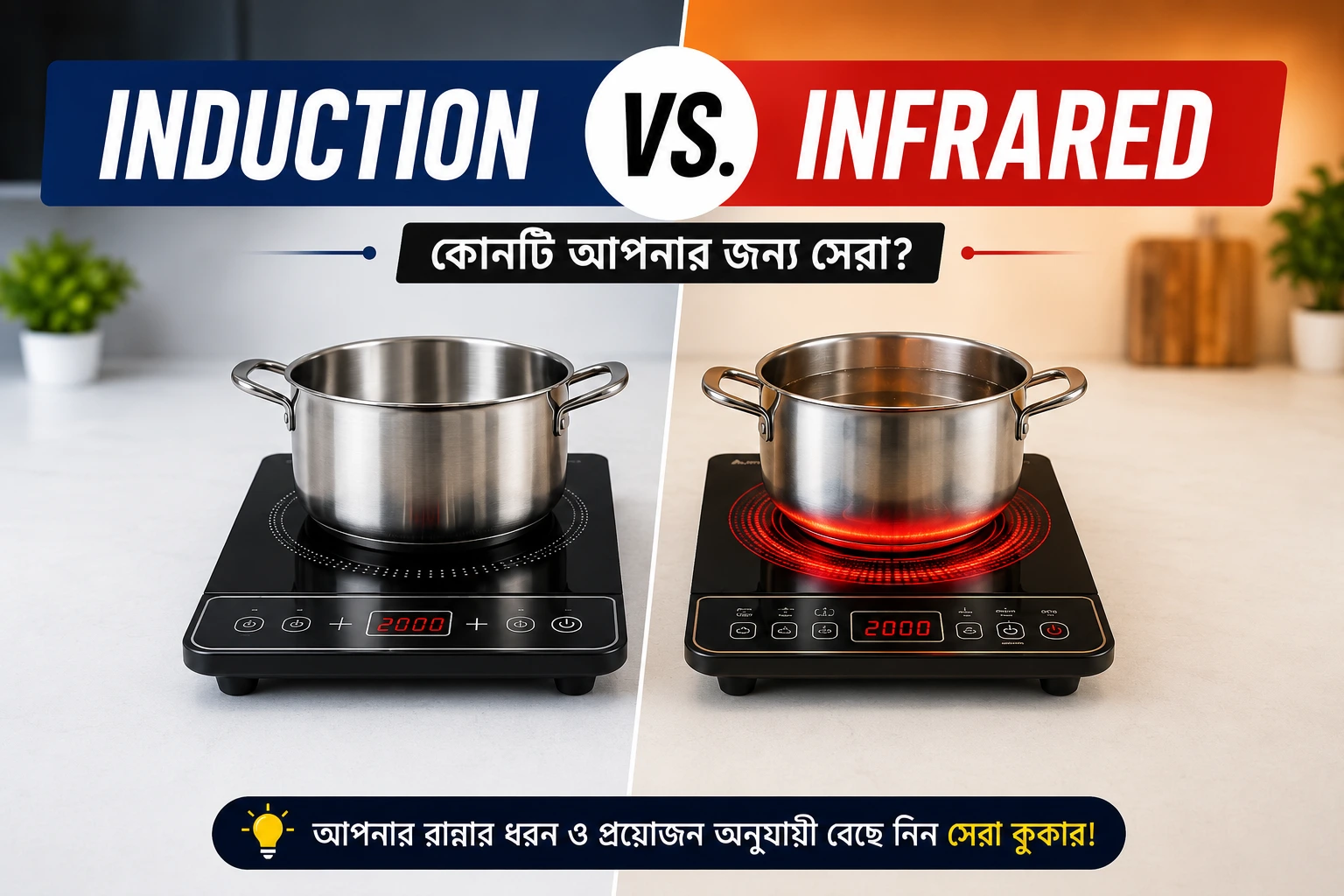
At first glance, they may look similar, but their functionality differs widely. The induction cooker is able to boil water faster and utilize electricity more effectively, whereas the infrared cooker allows you to utilize pretty much any type of cookware, even aluminium and clay pots.
Then how do you choose? Let us determine which of the cookers provides the best combination of performance, price, and convenience in your kitchen.
Factors to Consider Before Choosing a Cooker
Here’s few important factors explained briefly about both of the cookers to let you have a better idea about their usage:
The Efficiency Numbers That Matter
Despite claims that infrared cookers heat faster, independent research tells a different story. According to peer-reviewed studies and reports from independent energy organizations, induction cookers consistently provide higher energy efficiency and faster heating under comparable cooking conditions.
| Comparison | Induction Cooker | Infrared Cooker |
| Energy Efficiency | 84–99% | 60–65% |
| Cooking Speed | Faster | Slower |
| Temperature precision | Near-instant response, ±2–5°C | Slower response, ±10–20°C |
| Cookware Compatibility | Magnetic cookware only | Any Cookware |
Which Cooker Can Save You More Money?
For most buyers, price is one of the first things to consider. But that cost is just the tip of the iceberg. While infrared cookers often have a lower purchase price, induction cookers can offset that difference through lower electricity consumption over time.
| Cost Factor | Induction Cooker | Infrared Cooker |
| Typical Price Range | ৳3,000–6,000 | ৳2,500–5,000 |
| Cookware Upgrade Cost | ৳2,000–4,000 (if needed) | Usually none. |
| Electricity Consumption | Lower | Higher |
| Long-Term Running Cost | Lower | Higher |
Read More: Advantages of Induction Cooker
The Infrastructure Factors Most Buyers Overlook
If you have looked closely, your home’s electrical infrastructure plays a vital role in choosing any of the cookers. Let’s see few of the common scenarios below about each of them:
| Infrastructure Factor | Induction Cooker | Infrared Cooker |
| Older kitchen wiring | May require a dedicated circuit for stable performance | Generally, more tolerant of older wiring |
| Voltage fluctuations | More sensitive to low voltage | Usually more tolerant |
| No piped gas connection | Excellent long-term alternative | Excellent long-term alternative |
| LPG price fluctuations | Lower running costs due to higher efficiency | Higher electricity use for the same cooking task |
| Existing cookware | Requires magnetic cookware | Works with almost all cookware |
Burns, Electromagnetic Fields, and Child Safety
Safety considerations cannot be overlooked when it comes to many households.
| Safety Factor | Induction Cooker | Infrared Cooker |
| Surface temperature | Cooler after cooking | Remains very hot |
| Burn risk | Lower | Higher |
| Child safety | Safer due to cooler surface and auto shut-off | Requires close supervision |
| Electromagnetic field | Present, within international safety limits | No induction-type magnetic field |
| Automatic shut-off | Available in most models | Mostly not available |
Which Cooker Is Right for You?
There is no universal “ideal” cooker for all people. The ideal choice for you will depend on your living conditions, preferences, budget, and existing cookware. Please find below some guidelines to assist you.
Choose an Induction Cooker if You-
- Live in a house with up-to-date electrical wiring.
- Cook every day and desire to cut down on your electricity bill.
- Have kids and need a safer and cooler cooking surface.
- Are facing problems with a lack of LPG supply or high LPG prices.
- Own magnetic cookware or can purchase it.
- Need faster and more efficient cooking.
- Are seeking a good investment.
Choose an Infrared Cooker if You-
- Reside in an old building with restricted wiring capacity.
- Plan on continuing to use aluminium, clay, copper, or any other non-magnetic cookware.
- Cook food in a tawa or wok very often.
- Have low initial investment capability.
- Face voltage fluctuations and want a cooker that is more tolerant.
- Want an electric cooker fast, without replacing existing cooking utensils.
Final Verdict
By now, you have a clear picture of what each cooker offers. The best choice depends on how you cook, your budget, and your home’s electrical infrastructure. You can check out Apple Gadgets to find different prices, easy payment terms, and customer support to answer all your questions.
Mohammad Shariful Islam is the CEO and MD of Apple Gadgets, a leading e-commerce and retail chain for gadgets in Bangladesh. He has a passion for technology, entrepreneurship, and holds a decade of experience in gadget E-Commerce. He’s committed to providing the best possible shopping experience for customers by delivering the latest and trendy gadgets.