Horizontal Geyser vs Vertical Geyser: Which One is For You?

Picking a geyser sounds simple at first. It’s just hot water, right? But then you start looking at options, and suddenly there’s this whole horizontal vs vertical thing, which makes it harder to choose than expected.
Some bathrooms just don’t cooperate. Low ceilings, weird corners, pipes already fixed in place. So the geyser you pick isn’t only about heating water. It ends up being about fitting into your space without making everything feel cramped.
Both horizontal and vertical geysers do the same job. But they don’t behave the same once installed. Let’s dive right into it.
First, the basic difference
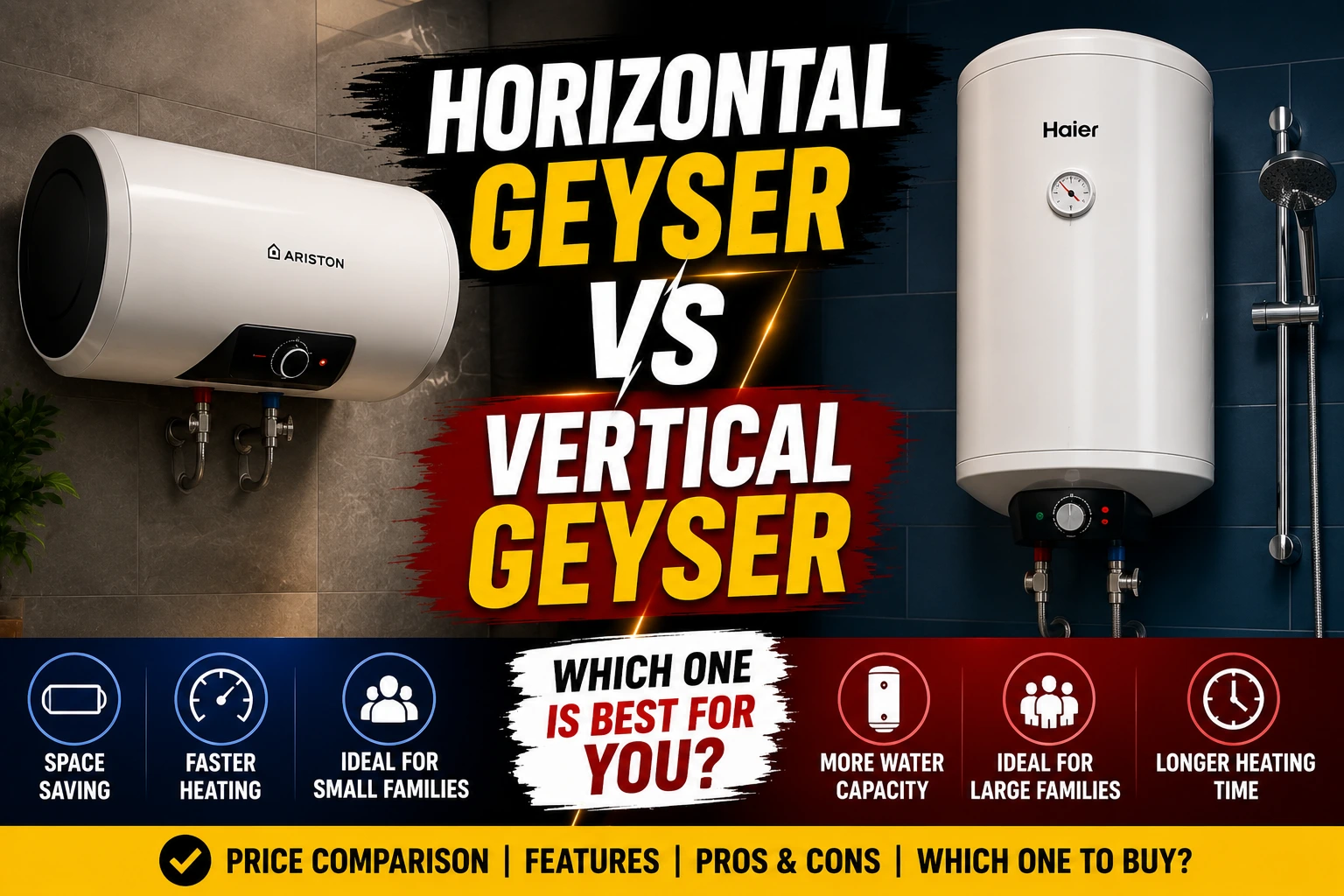
A vertical geyser stands upright. You’ve probably seen these more often. Tall, cylindrical, usually placed higher up on the wall.
On the other hand, horizontal ones sit sideways. Their designs are usually more stretched out. They go along the wall instead of climbing up it.
That’s pretty much the visible difference. But inside, things shift a bit because of that orientation. And yeah, it affects heating, space, even how the bathroom feels. Let’s understand them quickly in a quick comparison below:
Horizontal vs Vertical Geyser Comparison
Sometimes you don’t want to read everything. Just a quick side-by-side makes things clearer. This should give you a rough idea of what changes between the two.
| Feature | Horizontal Geyser | Vertical Geyser |
| Space | Works in low-height bathrooms | Needs proper wall height |
| Heating Speed | Slightly slower | Faster heating |
| Energy Use | A bit higher | More efficient |
| Installation | Flexible placement | Needs vertical space |
| Look | Compact, less visible | More noticeable |
Horizontal Geysers: When Space Starts Getting Tight
Some bathrooms just don’t have height. Especially in apartments. Or older houses where things weren’t planned for modern fittings. That’s where horizontal geysers quietly make sense. They slide into places where vertical ones just won’t fit. Above doors, under lofts, near ceilings without sticking out too much. You don’t have to rearrange everything just to install one.
Also, they don’t dominate the wall. That’s something people notice later. The bathroom feels a bit cleaner, less bulky. But it’s wise to remember, they’re not perfect for every user. Heating can feel a little slower sometimes. Not dramatically, but noticeable if you’re used to quicker hot water. It has to do with how water spreads inside the tank.
Modern models try to fix this with better insulation and heating elements. And they do a decent job. Still, the difference doesn’t disappear completely. So yeah, horizontal geysers are kind of a space-first decision.
Read More: Best Geyser in Bangladesh
Vertical Geysers: the usual choice for a reason
There’s a reason most homes still use vertical geysers. They just work. Simple as that. Water heats more naturally here. Hot water rises, cold water settles, and the system doesn’t have to fight physics. So heating feels quicker and more consistent. If multiple people are using hot water back-to-back, vertical models usually handle it better. Less waiting in between.
Also, there are more options available. Different sizes, different price ranges. You’ll find everything from small units to large family-sized tanks without much effort. But then comes the obvious limitation. You need space. Vertical space, specifically.
If your bathroom ceiling is low or cluttered already, installing one can feel like forcing it in. Sometimes installers suggest odd placements, and that’s where things start getting inconvenient.
So while vertical geysers are efficient, they don’t always fit comfortably everywhere.
Popular Geyser Models
Not every product clearly says it, so this table below will give you a quick idea of which type is which, along with a rough price range.
| Model | Type | Price Range |
| Haier ES30H-CK3(BD) 30L | Vertical | ৳10,000 – ৳12,000 |
| Midea D30-15A6 30L | Vertical | ৳10,000 – ৳13,000 |
| Havells Puro Plus 15L | Vertical | ৳12,000 – ৳14,000 |
| Ariston Horizontal PRO1 R | Horizontal | ৳21,000 – ৳23,000 |
| Havells Monza Slim | Vertical (Slim) | ৳14,000 – ৳18,000 |
Comparison Between Horizontal & Vertical Geyser
Instead of overthinking specs, it helps to look at how both types behave in real situations.
1. Space and Placement
This is usually the deciding factor. Horizontal geysers win when space is awkward. They adjust better. You don’t have to redesign your bathroom around them.
Vertical geysers need proper height. If that’s available, great. If not, it becomes a problem pretty quickly.
2. Heating Speed and Performance
Vertical geysers feel faster. Not by a huge margin, but enough to notice during daily use. Horizontal ones take a bit more time. Still reliable, just not as quick. For a single person or light usage, this difference barely matters. For families, it might.
3. Energy Use
This part is slightly tricky. Vertical geysers tend to use energy more efficiently because heating happens naturally inside the tank. Horizontal ones might run a bit longer to reach the same temperature. So, power usage can be slightly higher. Not extreme, but it adds up over time.
4. Installation Flexibility
Horizontal geysers are easier to adjust to unusual layouts. You can tuck them into corners, place them under structures, even hide them better if needed. Vertical ones are more straightforward, but also more demanding. They need proper clearance and stable wall space.
5. Maintenance and Access
Horizontal units are often easier to reach. Since they’re not always installed very high, checking or servicing them feels simpler. Vertical geysers can be a bit inconvenient if mounted too high. Not always, but it happens.
6. Look and Feel
This depends on preference, honestly. Horizontal geysers blend in better with modern setups. They don’t draw too much attention. Vertical ones are more visible. Some people don’t mind that. Others do.
Read More: Best Geysers for Small Family
Which One is Right For You?
It really depends on how your bathroom is set up. If your space feels tight, or the ceiling isn’t high enough, going for a horizontal geyser saves you a lot of trouble. You don’t have to adjust everything else just to make it work.
On the other hand, if space isn’t an issue, vertical geysers feel more reliable overall. Faster heating, slightly better efficiency, and more options to choose from. There’s no “one is better” answer here. It leans heavily on your layout.
Before You Make That Final Purchase!
Sometimes the decision isn’t just about the geyser itself. Plumbing matters. Existing pipe positions can limit where you install things. Shifting them adds extra cost, which people don’t always expect.
Usage pattern also plays a role. If hot water is needed frequently throughout the day, a vertical geyser might feel more convenient. Less waiting. But if it’s occasional use, horizontal works just fine.
And then there’s the whole bathroom design aspect. Shelves, mirrors, storage units. A bulky vertical geyser can get in the way more than you’d think.
Quick thought before you decide
A lot of people pick a geyser based on what they’ve seen before. Not necessarily what fits their current space. That’s where things go slightly wrong. If your bathroom allows it, vertical geysers are easy to trust. No surprises there.
If your space feels restrictive, horizontal geysers quietly solve that problem without making a big deal out of it. Neither choice is wrong. It just needs to match the way your bathroom is built.
Final Words
In the end, this isn’t really about horizontal vs vertical as much as it is about fit. Some homes naturally suit one type better. Trying to force the other usually leads to compromises. So instead of chasing the “better” option, it’s probably smarter to go with the one that fits without friction.
FAQs
Rabbi Rahman enjoys talking about tech, gadgets and especially smartphones. He’s been writing about them for four years . His favorite topic is discussing innovations in devices, engaging in conversations with others who share his passion for technology.