Best Portable Power Stations: Easy Solution To Your Power Issues

Power cuts don’t really come with a warning. If you think closely, sometimes it’s for a short time, while other times it drags on longer than you expected. Later on, you realize how helpless we become when everything around us is dependent on electricity.
A power station is not something everyone thinks about right away. But once you have one, it quietly becomes useful. Charging phones, running a fan, maybe even keeping small appliances running for a while.
Some people just need a small backup. Others want something that can handle more than just lights and charging. So instead of going through too many options, here are a few that actually make sense depending on how you plan to use them.
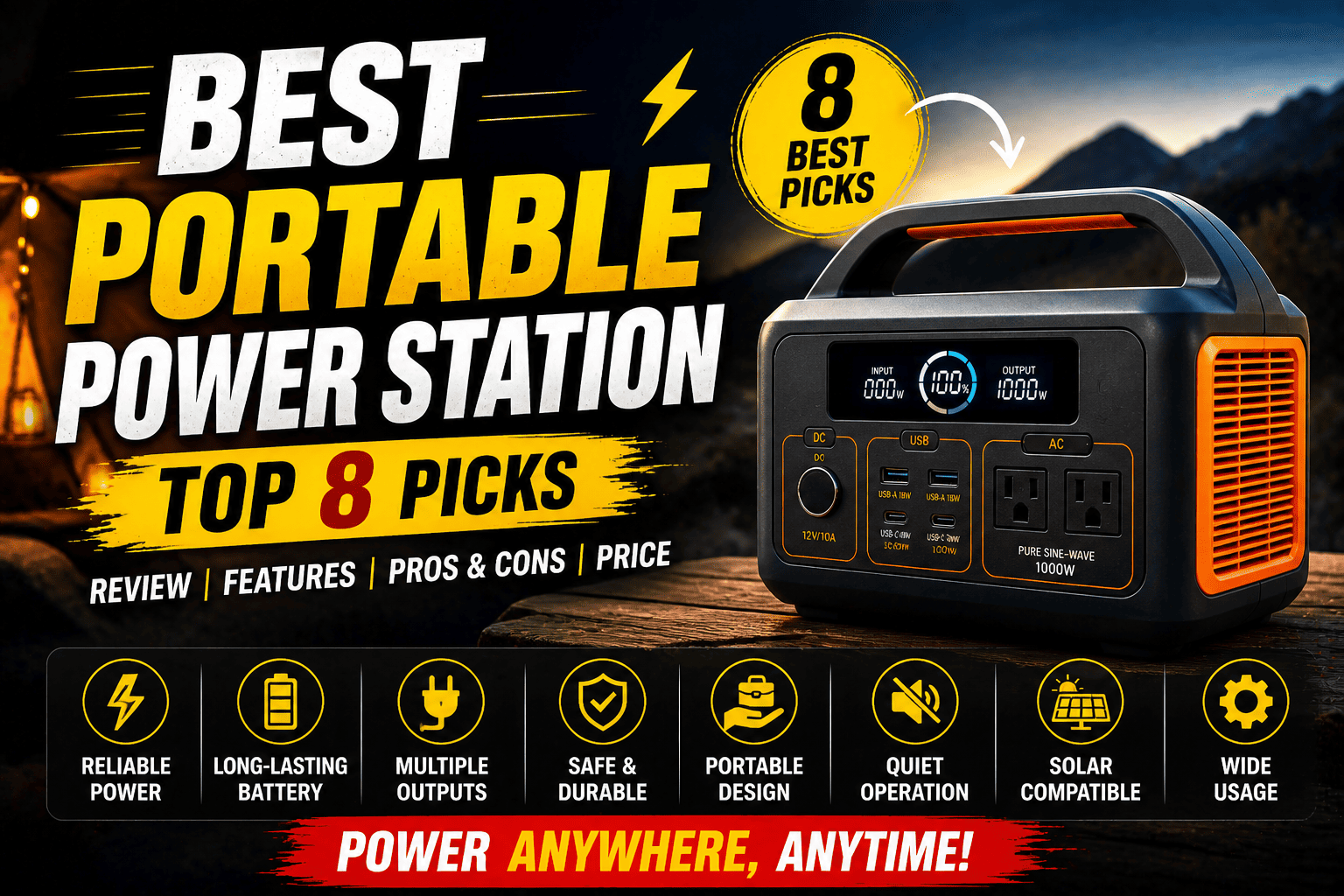
The 8 Best Portable Power Stations
Before You Pick One, Keep These in Mind
Design: Power stations can look similar at first, but they’re not really the same once you start using them. Some are meant for quick backup, others can run half your room without much trouble.
Capacity: Capacity matters, but not everyone needs a huge battery. Bigger ones cost more and take space. Smaller ones are easier to carry but won’t last very long.
Output: Then there’s output. Some power stations can handle large scale electronics like high powered MacBooks or even big fans, while some struggle to even charge small smartphones or basic lights. Actually, it depends on what you expect from it.
Charging: Also worth thinking about charging options. If you plan to use solar later, not all models support it properly.
Portable Power Stations Worth Looking At Right Now
Here are few of the notable power stations from low capacity to large ones to handle your home’s power effortlessly. Let’s understand them more below:
BLUETTI Premium 20 AC2P
| Key Specs | |
| Capacity | 230.4Wh |
| Output | 300W (600W surge) |
| Battery Type | LiFePO4 |
| Weight | 3.6 kg |
| Ports | 2×AC | 1×USB-C | 2×USB-A | 1×Car Port |
Firstly, we have the BLUETTI Premium 20 AC2p portable power station. And this one feels like something you don’t think you need at first. Then you start using it during load shedding, and it just becomes part of your setup.
It’s compact, easy to move around, and doesn’t take much space. Good for charging phones, laptops, maybe a fan for some time. Not built for heavy appliances though, that’s where the limitation shows. Battery life is decent for its size, and the LiFePO4 cells mean it should last longer over time. If your needs are basic and you don’t want to overspend, this one fits in without much thinking.
| Pros | Cons |
| Lightweight and portable | Limited power output |
| Long battery lifespan | Not for heavy appliances |
| Good for basic backup use |
EcoFlow River 2 | Smart and Fast Charging Option
| Key Specs | |
| Capacity | 256Wh |
| Output | 300W (600W surge) |
| Battery Type | LiFePO4 |
| Weight | Approx. 3.5 kg |
| Ports | 6 Outputs |
This one feels a bit more modern. Not just in looks, but in how it works. Charging is faster, and the app control adds a bit of convenience if you actually use it. Capacity is still in the smaller range, so similar use cases as the previous one. Phones, laptops, maybe a router during power cuts. It handles those easily.
What stands out is the flexibility. You can charge it from AC, car, even solar. That makes it more useful if you’re planning for outdoor use or travel. Not a heavy-duty option, but for everyday small backup, it does the job smoothly.
| Pros | Cons |
| Fast charging support | Still limited for heavy usage |
| Multiple input options | Slightly higher price for size |
| App connectivity |
Read More: Ultimate Guide to Picking the Right Portable Power Station
BLUETTI Premium 50 AC50P | Step Up in Power
| Key Specs | |
| Capacity | 504Wh |
| Output | 700W (1200W surge) |
| Battery Type | LiFePO4 |
| Weight | 6.9 kg |
| Ports | Multiple AC, USB, car output |
This one starts to feel more serious. Not too big, but clearly more capable than entry-level models. You can run more than just small devices here. Fans, lights, maybe even small appliances depending on usage. That extra wattage makes a difference when the power stays out longer.
It’s a bit heavier, so not something you’ll carry around casually. But for home backup or planned outdoor use, it works well. Also comes with better protection systems and stable output, which matters when you’re connecting multiple devices.
| Pros | Cons |
| Higher power output | Heavier than compact models |
| Good mid-range capacity | Not exactly budget-friendly |
| Reliable performance |
EcoFlow E980 – Balanced for Home Backup
| Key Specs | |
| Capacity | 980Wh |
| Output | 500W |
| Battery Type | LiFePO4 |
| Weight | 12 kg |
| Ports | Multiple AC, USB, DC |
At number four, EcoFlow E980 ensures more stability. You’re not thinking about short backup anymore, this can handle longer outages. Capacity is enough to run multiple devices together. Lights, fans, charging, maybe even more depending on how you manage usage.
It also comes with app control and a proper display, which helps keep track of things. Not waterproof though, so indoor use is safer. It’s not small, and you’ll feel the weight. But once placed, it does its job quietly.
| Pros | Cons |
| High capacity for longer backup | It’s heavy |
| Multiple output options | Not waterproof |
| App control available |
BLUETTI Premium 100 V2 – Strong Backup Choice
| Key Specs | |
| Capacity | 1024Wh |
| Output | 2000W (2700W surge) |
| Battery Type | LiFePO4 |
| Weight | 11.5 kg |
| Ports | Multiple AC, USB, DC, Car Ports |
This one moves into a different level. You can actually run heavier appliances here, not just basic devices. Output is strong, and the fast charging is noticeable. It gets back up quickly, which helps during frequent outages.
Good for people who want something more reliable than just a backup for phones and lights. Maybe small kitchen appliances, tools, things like that.Still portable, but not something you’ll carry often. More like place it and use it when needed.
| Pros | Cons |
| High output power | Expensive |
| Fast charging | Less portable |
| Long battery life |
EcoFlow E2000 – Heavy-Duty Home Backup
| Key Specs | |
| Capacity | 2048Wh to 6144Wh (expandable) |
| Output | Up to 2400W |
| Battery Type | LiFePO4 |
| Weight | 23 kg |
| Ports | Multiple AC, USB, DC, Car Power Outlet |
This is where things start getting serious. It’s not just backup anymore, it can support a big portion of your home if used properly. Expandable capacity is useful if you plan long-term use. Also supports high solar input, which adds flexibility.
Weight is definitely noticeable. You won’t be moving it around much. But for home use, that’s not really a problem. If you deal with long outages often, this kind of setup starts to make more sense.
| Pros | Cons |
| Very high capacity | Heavy to carry |
| Expandable system | High cost |
| Strong output |
Read More: পোর্টেবল পাওয়ার স্টেশন কী? কেন আপনার একটি পাওয়ার স্টেশন দরকার
EcoFlow Delta Pro – For longer Power
| Key Specs | |
| Capacity | 3600Wh |
| Output | 3600W (7200W surge) |
| Battery Type | LiFePO4 |
| Weight | Approx. 45 kg |
| Ports | Multiple AC, USB, DC, Car Power Outlet |
Moving on to number seven, it’s the entry of ECoFlow Delta Pro, and it’s like a full backup system. To be honest, it’s not something casual at all. You can run multiple heavy appliances together if needed. That’s the main point here. It’s built for serious use cases.
Of course, size and weight are big factors. This is more like equipment than a simple device. For homes that want reliable backup without going into full generator setup, this sits somewhere in between.
| Pros | Cons |
| Extremely powerful | Hard to carry |
| Numerous ports | High price |
| Suitable for heavy loads |
EcoFlow DELTA Pro Ultra – For Maximum Power Setup
| Key Specs | |
| Capacity | 6144Wh (expandable) |
| Output | 7200W |
| Battery Type | LiFePO4 |
| Weight | Inverter: 31.7 kg, Battery: 50.7 kg |
| Ports | Multiple AC, USB, DC, Car Power Outlet |
This is not for everyone. It’s more like a complete power solution rather than a simple backup. Capacity is massive, and you can expand it even further. It can handle almost everything in a home setup if configured properly.
Also supports strong solar input, which makes it suitable for long-term usage. But realistically, this is for very specific users. Not something you casually buy.
| Pros | Cons |
| Massive capacity | Very expensive |
| Extremely powerful output | Not portable in real use |
| Expandable system |
Quick Comparison – Which One is Right for YOU?
Looking at specs one by one can get a bit confusing after a point. Everything starts to feel similar, even when it’s not. So here’s a simple breakdown. Just a quick way to see which one fits your use, budget, and how much backup you actually need. And if you have decided to buy one, visit Apple Gadgets to get your first power station at the best deal.
| Model | Capacity | Power Range | Best For |
| BLUETTI AC2P | 230Wh | 300W | Light use, phones, router, short backup |
| EcoFlow River 2 | 256Wh | 300W | Travel, small backup, fast charging |
| BLUETTI AC50P | 504Wh | 700W | Regular home use, fans, longer backup |
| EcoFlow E980 | 980Wh | 500W | Family use, multiple devices |
| BLUETTI 100 V2 | 1024Wh | 2000W | Heavy devices, stronger backup |
| EcoFlow E2000 | 2048Wh+ | 2400W | Long outages, serious home backup |
| EcoFlow Delta Pro | 3600Wh | 3600W | Almost full home backup |
| Delta Pro Ultra | 6144Wh+ | 7200W | Full-scale power solution |
Final Words
Power stations are one of those things you don’t really think about until you need one. And then suddenly, it feels important. If your needs are small, there’s no point going big. A compact unit will do just fine. But if power cuts are frequent or long, investing in a higher-capacity model actually makes daily life easier.
It really comes down to what you expect from it. Just charging devices, or running your home without interruption. Pick based on that, not just specs. And once you get used to it, you’ll probably wonder why you didn’t get one earlier.
Rabbi Rahman enjoys talking about tech, gadgets and especially smartphones. He’s been writing about them for four years . His favorite topic is discussing innovations in devices, engaging in conversations with others who share his passion for technology.