Inverter vs Non-Inverter AC: Which One is Best Fit for You?

Summer has already started its unbearable heat everyday. Now, it’s obvious you will end up buying an air conditioner that suits you best right now. Remember to not choose the wrong AC for your perfect home. Without relying on salesman’s advice at a retail store, today we will discuss the two popular types of AC’s in the market.I will guide you to know the basic differences of two popular AC types in the market.
In today’s article, we’ll break down the key differences between the two and help you decide which one suits your needs best, without relying on any sales pitch.
Inverter AC vs Non-Inverter AC: What’s the Real Difference?
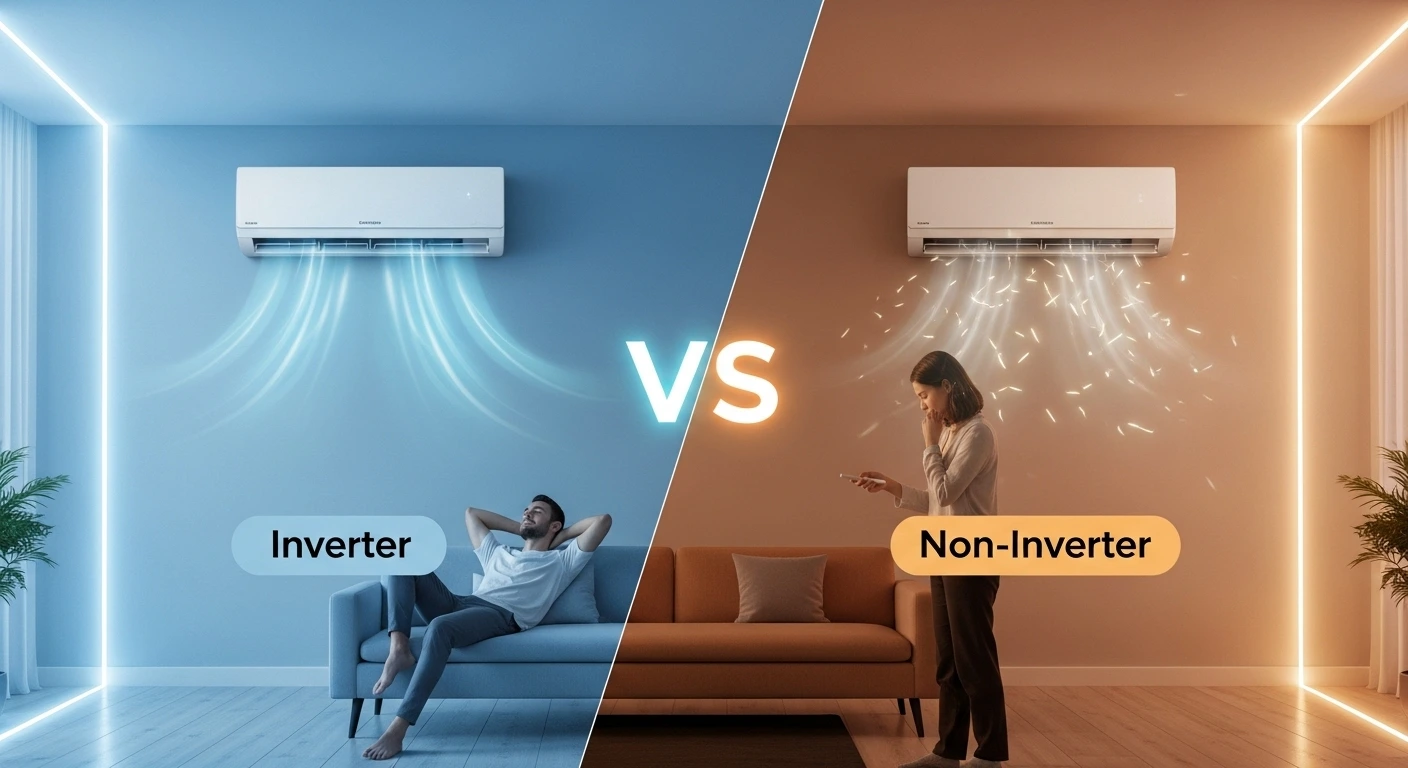
As we all know now, Inverter ACs adjust the compressor speed to maintain a constant temperature, making them more energy-efficient and quieter. Non-inverter ACs operate at full power or shut off entirely, causing more noise and energy use. Inverter models offer smoother performance and better comfort over time.
Inverter AC
Let’s start with inverter ACs, known for their energy efficiency and consistent performance. By using its unique variable-speed compressor, the AC adjusts power with the room’s temperature. Later, when the appropriate temperature is reached, it slows down but doesn’t stop completely, which eventually saves energy while providing consistent cooling. This process makes them energy-efficient, quiet and long lasting.
Moreover, inverter ACs are designed to reduce power fluctuations and deliver consistent, efficient cooling. They maintain a stable room temperature without the frequent on-off cycles, which leads to lower electricity consumption. Many inverter models also use eco-friendly refrigerants that have a reduced impact on the environment, making them a smarter choice for energy-conscious users.
Non-Inverter AC
Non-inverter ACs use a fixed-speed compressor that turns on and off to maintain the desired temperature. This can result in slightly higher energy use and less consistent cooling. However, they are more affordable upfront and work well for short-term or occasional use.
Key benefits include lower initial cost, basic but reliable cooling, and simpler technology that can be easier to service. The compressor does make some noise when restarting, but many users find it acceptable given the price.
Both types cool effectively, but inverter ACs adjust compressor speed for better efficiency, while non-inverter models rely on start-stop cycles. The right choice depends on your usage pattern, budget, and long-term goals.
Read More: Best AC Brand in Bangladesh
To make them differ in a simpler manner, here’s a quick recap down below for your better understanding:
| Feature | Inverter AC | Non-Inverter AC |
| Compressor Control | Variable speed | On/Off only |
| Energy Efficiency | High | Moderate to low |
| Noise Level | Low | Higher |
| Comfort | Stable temp | Fluctuating temp |
| Lifespan | Longer | Shorter |
Which AC Consumes Less Electricity: Inverter or Non-Inverter
Just imagine, you have bought a new AC and immediately after one month you see a massive electricity bill price hike. Just like you, anyone would be furious after noticing this. This is what happens when you buy an AC without knowing its proper functioning process. This sudden price growth is occurring because you have purchased a non-inverter AC.
This type of AC usually consumes more electricity by running full on power to reach its desired cooling. Making it consume more electricity than inverter ACs. That is Non-inverter ACs spike in power every time the compressor restarts, increasing energy use.
Now, in terms of inverter ACs, they literally save you up to 44% of electrical usage compared to typical non-inverter ACs. By properly adjusting the speed of the compression to maintain desired temperature. As a result it becomes more energy efficient, and makes them ideal for long-term use and continuous cooling. Let’s see down below some quick facts how both the AC consumes power:
| Aspect | Inverter AC | Non-Inverter AC |
| Power Use Pattern | Continuous, adaptive | Repeated high bursts |
| Bill Impact | Lower over time | Higher with frequent use |
| Best Use Case | Daily, long hours | Short-term or rare use |
| Savings Potential | High (long-term) | Low |
| Eco-Friendliness | Better | Lower |
Is an Inverter AC Worth the Extra Money?
Everythings better around us costs a little bit extra. There’s no denying that inverter ACs usually cost more, and obviously it’s for a good reason. As they deliver variable compressors along with other beneficial features like eco-mode and their quieter operation, in most cases they cost way higher than typical non-inverter ACs in the market.
Do remember, although inverter ACs are more expensive upfront, they offer long-term savings through lower electricity bills, reduced maintenance, and longer lifespan. That is why they’re worth it for frequent users or households in hotter climates. On the contrary, non-inverter ACs may suit those, who have tight budgets and usage will be minimal. Most of the cases these users don’t usually use the AC on a regular basis. To understand more, here’s a quick factor check about inverter and non-inverter AC and why one cost less and one cost more:
| Factor | Inverter AC | Non-Inverter AC |
| Initial Price | Higher | Lower |
| Long-Term Cost | Lower | Higher |
| Maintenance | Less frequent | More frequent |
| ROI | Strong | Weak |
| Ideal For | Heavy use | Occasional use |
In Depth on Cooling and Electricity Saving: Inverter & Non-Inverter
You might be wondering that you have won after purchasing a low priced AC. If your prime concern is saving money, then a non-inverter AC is the option you should go for. On the flip side, if you care about long time usage, smoother operation with less noise and gives you longer efficiency then an inverter AC is ideal for you. There’s also other prime benefits like faster cooling and saving electricity. To understand more, let’s know it better:
Faster Cooling:
There’s a question that is knocking your mind when you purchase a new apartment, which is: Does an Inverter AC Cool Faster Than a Non-Inverter? Well you assumed right and the answer is yes, inverter ACs generally cool faster than non-inverter ACs. Here’s why:
Inverter ACs often start at higher power to quickly reach the desired temperature, then lower their speed to maintain it. This creates a sense of fast cooling and consistent comfort. Non-inverter ACs may cool quickly too, but often cause overcooling or undercooling with fluctuations.
Well, it all goes down to one component’s magic, which is none other than its compressor. As you get a variable speed compressor process technology, interveter ACs can modify the compressor’s current speed and cool down exactly which it requires or needs. Instead of blasting cold air at full speed like non-inverters do, which usually consumes more electricity, Inverter ACs adjust the cooling intelligently.
To give you an example, just imagine a mini delivery truck continuously stopping and accelerating in the middle of a road. Which will make the engine get hot and cold simultaneously, which will eventually harm the engine in the long run. For a better understanding in a quick manner, here’s how it cooling works in both the ACs:
| Cooling Aspect | Inverter AC | Non-Inverter AC |
| Initial Cooling | Fast & adaptive | Fast but inconsistent |
| Temp Consistency | High | Low |
| Overcooling Risk | Low | High |
| Comfort Level | Better | Moderate |
| Cooling Method | Gradual & stable | Start-stop cycles |
Choosing the Wrong AC Could Make Your Room Unbearable
Which AC Type is Right for Your Room and Usage? Inverter ACs are best for medium to large rooms and continuous use, like bedrooms, living rooms, or offices. Non-inverter ACs may suit smaller spaces or rarely used rooms. Your choice should depend on room size, climate, and how often you run the air conditioner.
| Criteria | Inverter AC | Non-Inverter AC |
| Room Size Fit | Medium to large | Small to medium |
| Usage Frequency | High | Low to moderate |
| Ideal Climate | Hot regions | Mild or seasonal use |
| Energy Concern | Important | Less important |
| Room Examples | Bedroom, living room | Guest room, storeroom |
Read More: AC Buying Guide
Which One Do You Pick: Inverter or Non-Inverter AC
With the rising temperature in summer and expanding access to electricity, both types of ACs have a place in the Bangladeshi market. Now, it usually comes down to one question, which one do you pick when you plan to buy an AC.
Think straight, if you consider yourself as environmentally friendly and want to do something which consumes less electricity while not giving you extra bills, then choosing an inverter AC is the right option. Do remember, you might have to pay a little bit extra for that first purchase, as the technology is advanced and there’s a lot of well brands available in the market like Gree, Haier, Media and so on.
On the other hand, if you are low on budget and this is your first time buying an AC, where you think AC is luxury for you, then choosing a non-inverter would be a good option for starters. Keep in mind that the price is low at first when you make that final purchase, but your electricity bill will be higher compared to inverter ones.
Verdict
Long story short, today’s discussion was really thorough and specific, which is about inverter and non-inverter AC. I have talked about the definitions and few core differences I have found about both the AC categories.
It’s time for your choice, to understand the facts that you learned today about Inverter and non-inverter ACs. If you prefer better performance, long-term energy saving for future and noise-free operation then go for Inverter ACs. And, if you are not willing to spend a huge amount at first but still require an AC for frequent moments, then the non-inverter ones are a good option for you.
Above all, remain updated about any kind of tech related info and reviews by keeping eyes on Apple Gadget and stay cool all summer long by getting the right AC for your home.
Rabbi Rahman enjoys talking about tech, gadgets and especially smartphones. He’s been writing about them for four years . His favorite topic is discussing innovations in devices, engaging in conversations with others who share his passion for technology.